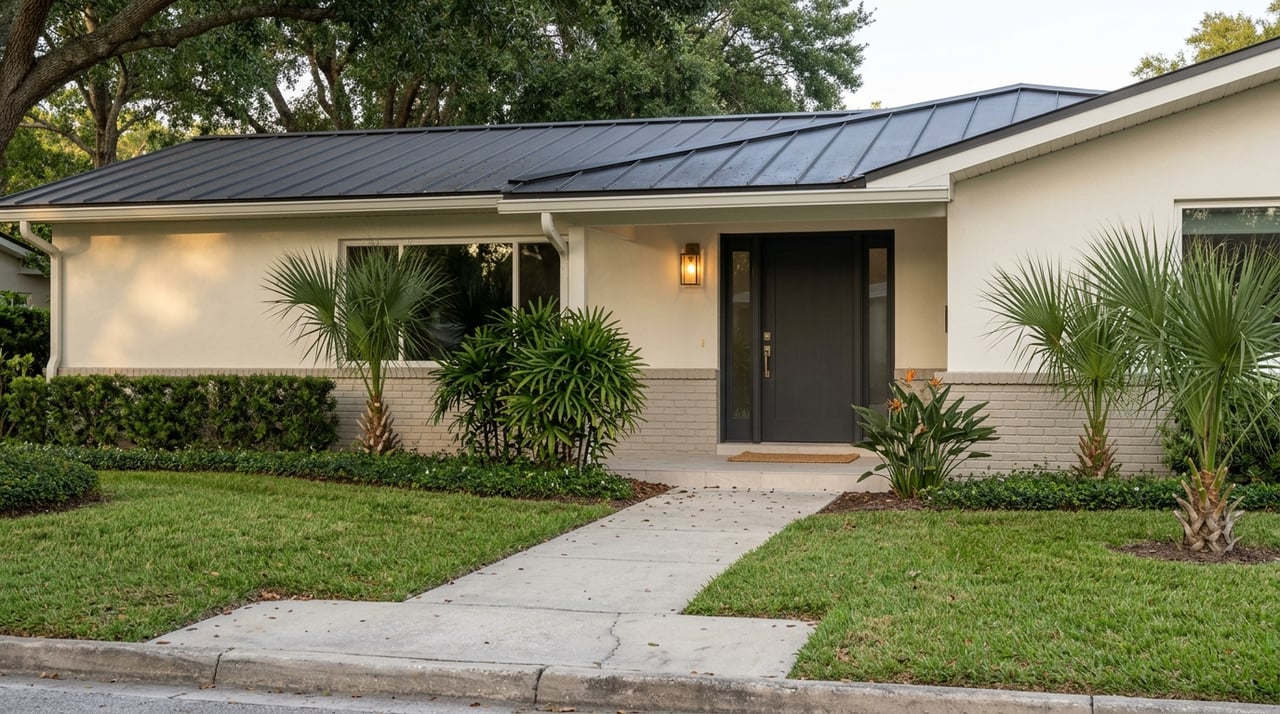
Wondering if an older home in Lake Padgett Estates East is a hidden gem or a future project list? The truth is, it can be either one. If you are thinking about buying here, understanding the community’s older housing stock, recurring costs, and inspection priorities can help you make a smart move with fewer surprises. Let’s dive in.
Why older homes stand out here
Lake Padgett Estates East describes itself as an older community built in the 1970s, with more than 1,100 properties, mature oak trees, waterways, and a clubhouse-centered amenity package. The neighborhood tour also points to Parkway Boulevard as the main corridor and notes convenient access to shopping, schools, and major road connections through the area. You can explore more on the community website.
In practical terms, many homes in and around Lake Padgett Estates East reflect older suburban design. Public listings show a pattern of one-story ranch-style homes and split-floor-plan layouts, often ranging from about 1,050 to 2,200 square feet with 3 bedrooms and 2 to 2.5 baths. That means you should expect homes with established footprints and character, not necessarily the open-concept layouts common in new construction.
Condition matters more than age alone
When you buy in an older neighborhood, the year built tells only part of the story. Some homes have already been improved with newer roofs, impact windows, updated flooring, air-conditioning systems, and water heaters. Others may still be much closer to their original condition.
That is why quality of updates matters just as much as square footage or lot view. A well-maintained 1970s or 1980s home can be a stronger buy than a larger property with aging systems and unfinished repairs. As you compare options, look past staging and focus on what has actually been replaced, upgraded, or professionally maintained.
Verify utilities before you assume
One detail buyers should not overlook is utility service. Some properties in the broader Lake Padgett Estates area appear to use private well and septic systems. Because of that, you should verify the utility setup for the specific parcel instead of assuming every home has the same service type.
This matters for both budgeting and inspections. If a property uses private systems, you may want to factor in additional due diligence, maintenance expectations, and potential replacement planning. It is a simple check that can prevent confusion later in the transaction.
Understand the ownership structure and fees
Lake Padgett Estates East has a Property Owners Association, and the broader Lake Padgett Estates community is also served by an independent special district created under Florida law. According to the Lake Padgett Estates Independent Special District, the district maintains and finances community improvements, and its assessments appear on annual Pasco County tax bills.
The key point is that these costs may not apply the same way to every parcel. Buyers should confirm whether a specific property is subject to the district assessment, the POA requirements, or both. This is an important part of calculating your true monthly and annual housing cost.
For FY 2025-2026, district budget documents show a single-family annual O&M assessment of $731.32, up from $658.80 in FY 2024-2025. Because assessments can change from year to year, it is smart to verify the current tax bill and resale disclosure rather than relying on older estimates.
Amenities can add real value
One reason buyers are drawn to this neighborhood is the amenity package. According to the Lake Padgett Estates East neighborhood tour, the clubhouse includes a lounge, fitness room, office, and rentable function room. The community also offers a pool, tennis courts, basketball courts, racquetball courts, jogging track, batting cage, playground, dog park, and picnic area.
For some buyers, those amenities help justify community costs and add daily convenience. For others, they are simply a bonus. Either way, it helps to think about how often you would actually use them when weighing the value of one property versus another.
Review community documents before closing
Older communities often have more established rules, forms, and procedures, and it is worth reviewing them early. The POA’s documents page includes bylaws, DCR summaries, original DCRs, rules and regulations, architectural modification forms, clubhouse ID information, and swipe-card rules.
If you are planning future changes, such as exterior work, a screened enclosure, or other visible improvements, this review becomes even more important. You want to know what is allowed, what requires approval, and what your responsibilities would be after closing.
Focus your inspection on big-ticket systems
A standard home inspection is one of your most important tools when buying an older home. According to Fannie Mae’s inspection guidance, a general inspection typically covers floors, doors, foundation, roof, walls and ceilings, windows, electrical, central air, heating, structural components, attic and insulation, plumbing, and basement areas where applicable.
In a neighborhood with many decades-old homes, those systems can tell you far more than the paint color or countertop finish. A home that looks move-in ready during a showing can still have an aging roof, dated electrical components, insulation gaps, or hidden plumbing concerns. Your inspection period is where you separate cosmetic appeal from long-term ownership reality.
Know what a general inspection does not cover
Just as important, a general inspection does not cover everything. Fannie Mae notes that detached buildings, decks, docks, fences, waterfront structures, buried or concealed items, pests or termites, asbestos, lead paint, mold, and code compliance issues are outside the scope of a standard inspection.
That matters in Lake Padgett Estates East because some homes have waterfront or canal settings, docks, pools, screened areas, or other extras. If the property includes features like these, separate specialty inspections may be worth considering. This is especially true when a feature could be expensive to repair or replace.
Check permit history on updates
When a seller says a roof, windows, HVAC system, or addition was updated, do not stop at the verbal description. Pasco County states that building permits are generally required before construction, enlargement, alteration, repair, demolition, or replacement of regulated systems such as electrical, mechanical, plumbing, and impact-resistant coverings. You can review the county’s permit guidance here.
For older homes, permit history can help confirm whether major improvements were properly handled. Ask about permits for items like:
- Roof replacements
- Window upgrades
- HVAC replacement
- Electrical or plumbing work
- Pool installation or updates
- Screened enclosures
- Additions or conversions
This step is not about being overly cautious. It is about understanding what work was done, when it was done, and whether you may inherit issues later.
Do not skip flood and water checks
Because the neighborhood includes waterways and some waterfront lots, flood due diligence matters. FEMA identifies its Flood Map Service Center as the official public source for flood hazard information, and FEMA also notes that standard homeowners insurance does not cover flood damage.
Even if a home is not directly on the water, location-specific flood risk can affect insurance, lender requirements, and long-term costs. That is why it makes sense to verify the property’s flood map status early in the process, especially if the lot backs to a canal, lake, or low-lying area.
Budget for updates in three stages
When buying an older home, your real budget is not just the purchase price. It is the purchase price plus the likely cost of maintenance, repairs, and modernization over time. Based on current listings, the most common update categories in this area include roofs, HVAC systems, windows or storm protection, flooring, water heaters, paint, kitchens, baths, and in some waterfront cases, dock-related work.
A simple way to plan is to split your post-closing costs into three buckets:
- Immediate items: safety concerns or major system issues found during inspection
- First-year upgrades: changes that improve comfort and livability soon after move-in
- Later improvements: optional projects you can schedule after living through a full Florida summer and hurricane season
This framework helps you buy with a clear head. Instead of trying to renovate everything at once, you can prioritize what truly matters and make better financial decisions.
Expect some deferred maintenance
In a mature, built-out neighborhood, some homes will come with deferred maintenance. That does not automatically make them poor choices. It just means you should go in with realistic expectations.
In many cases, the issues are not flashy. They may include drainage corrections, aging appliances, insulation gaps, or hidden moisture concerns that are easy to miss during a short showing. The goal is not to avoid every older home. The goal is to understand the condition, price the risk appropriately, and decide whether the opportunity still makes sense for you.
What smart buyers do before making an offer
If you are serious about buying in Lake Padgett Estates East, it helps to approach each property with a checklist mindset. That keeps emotions from taking over when you find a home with a great lot, water view, or updated interior.
Before or during the offer process, make sure you:
- Verify utility type for the specific property
- Review the current tax bill for special district assessments
- Ask for POA or resale documents
- Confirm ages of roof, HVAC, water heater, and windows
- Request permit history for major updates
- Consider specialty inspections when the home has docks, pools, or waterfront features
- Check flood zone details and insurance implications
- Build a repair and upgrade budget beyond closing costs
That kind of preparation can give you more confidence in both your offer strategy and your long-term ownership plan.
Buying an older home in this neighborhood can absolutely be a smart move, especially if you value mature trees, established surroundings, and amenities that are already in place. The key is to look beyond surface appeal, verify the details that affect cost and condition, and make sure the home fits both your lifestyle and your budget. If you want local guidance with a thoughtful, detail-focused approach, Vickie Mitchell can help you evaluate options and move forward with clarity.
FAQs
What should you inspect when buying an older home in Lake Padgett Estates East?
- You should pay close attention to the roof, foundation, electrical, plumbing, HVAC, windows, insulation, and structural components, since these are common big-ticket systems covered in a general inspection.
What fees should you verify in Lake Padgett Estates East before buying?
- You should verify whether the property has POA obligations, whether the independent special district assessment applies to that parcel, and what the current annual amount is on the tax bill.
What amenities are available in Lake Padgett Estates East?
- According to the community, amenities include a clubhouse, lounge, fitness room, pool, tennis courts, basketball courts, racquetball courts, jogging track, batting cage, playground, dog park, and picnic area.
What permits should you check on an older home in Pasco County?
- You should ask about permit history for major work such as roof replacement, windows, HVAC, electrical, plumbing, additions, pools, and screened enclosures.
What insurance question matters for waterfront or canal homes in Lake Padgett Estates East?
- You should verify flood hazard information early because FEMA notes that standard homeowners insurance does not cover flood damage, which can affect both costs and coverage needs.